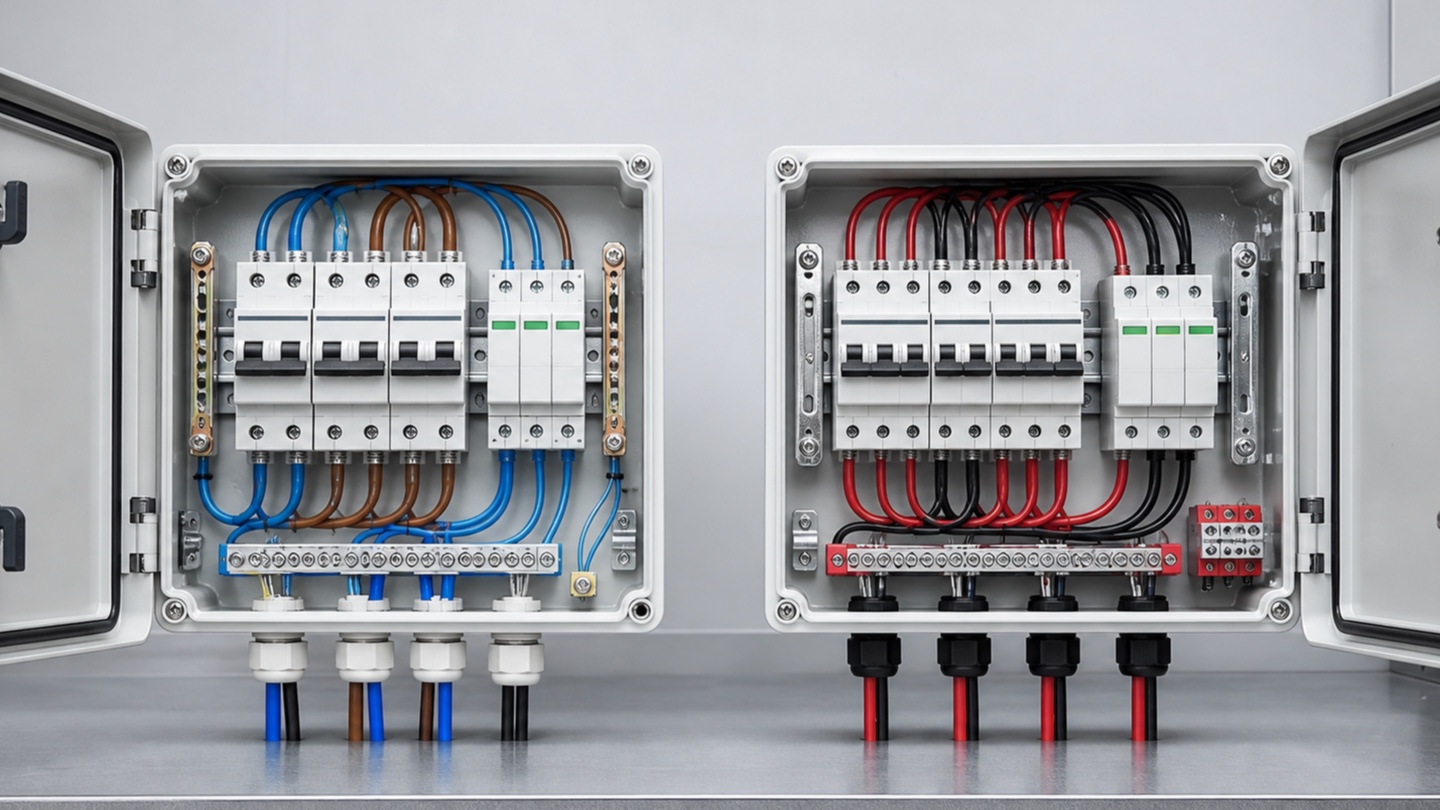
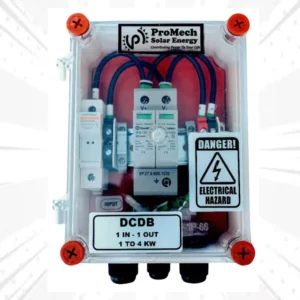
A solar DC distribution box sits between the photovoltaic array and the inverter in system designs that require DC combining, isolation or protection at that point. The label ‘DCDB’ describes a function, not one universal box. A useful purchase request must reflect the approved single-line diagram, string arrangement and equipment schedule.
Start with the approved DC design
Ask the project designer or installer for the latest single-line diagram and DC equipment schedule before requesting prices. These documents establish whether a DCDB is required, where it is located and which functions the assembly must provide.
Avoid selecting a box from the solar plant capacity alone. Projects with the same kW rating can have different string lengths, inverter inputs, circuit counts and system voltages, leading to different DCDB requirements.
Confirm the number of inputs and outputs
Record how many PV strings enter the box and how many outgoing circuits connect to the inverter or downstream equipment. State whether positive and negative conductors are switched or protected as required by the approved design.
The circuit count affects enclosure size, terminal arrangement, internal wiring and cable-entry space. Leave expansion capacity only when it is specifically part of the project requirement rather than adding spare ways without a design basis.
Define the enclosure and installation environment
Tell the supplier whether the DCDB will be indoors or outdoors, wall-mounted or structure-mounted, and exposed to sun, rain, dust, heat or corrosive conditions. The project specification should define the required enclosure material and environmental protection.
Also consider access for operation and maintenance. The enclosure must provide practical space for device layout, conductor bending, terminations, labels and heat management without compromising the specified protection level.
Plan cable entry and termination details
List the incoming and outgoing cable sizes, quantities and entry directions. Confirm whether the assembly requires cable glands, connector interfaces, terminals or busbars, and whether those accessories are included in the supplier’s scope.
A box may contain the correct devices but still be difficult to install if gland sizes, terminal capacity or entry space do not match the cable schedule. These details are easier to resolve before fabrication than at site.
Use a quote-ready DCDB checklist
Send the approved drawing or schedule with a written summary so the supplier can confirm what is included and highlight any proposed alternative.
- PV string input count and outgoing circuit count
- Design DC voltage and current information
- Specified isolator, fuse or breaker and surge-protection schedule
- Enclosure material, mounting position and environmental requirement
- Cable sizes, gland or connector types and entry direction
- Required labels, indication, monitoring and documentation
- Delivery location, quantity and required date
Compare complete assemblies, not box prices
When comparing quotations, check the component makes and models, ratings, enclosure, terminals, glands, wiring, labels and documentation line by line. A lower-priced quote may exclude items that another supplier has included.
Ask the responsible designer or installer to verify the final bill of materials before ordering. Fabrication, installation and testing should follow the approved project documents and manufacturer instructions.
Frequently asked questions
What details are needed for a solar DCDB quotation?
Share the approved string input and output count, design DC voltage and current information, protective-device schedule, enclosure requirement, cable sizes, entry direction, mounting location and delivery quantity.
Can a DCDB be selected only by solar plant capacity?
No. Plant capacity does not show the string arrangement, inverter configuration, circuit count, system voltage or required protective devices. Use the approved single-line diagram and equipment schedule.
What should be compared in two DCDB quotations?
Compare the complete assembly: device makes and models, DC ratings, enclosure, terminals, glands, internal wiring, labels, documentation and included accessories—not only the enclosure price.
Key takeaway
For an accurate solar DCDB quotation, provide the approved circuit arrangement, DC design values, protection schedule, enclosure requirement and cable-entry details. Project capacity alone is not a complete specification.