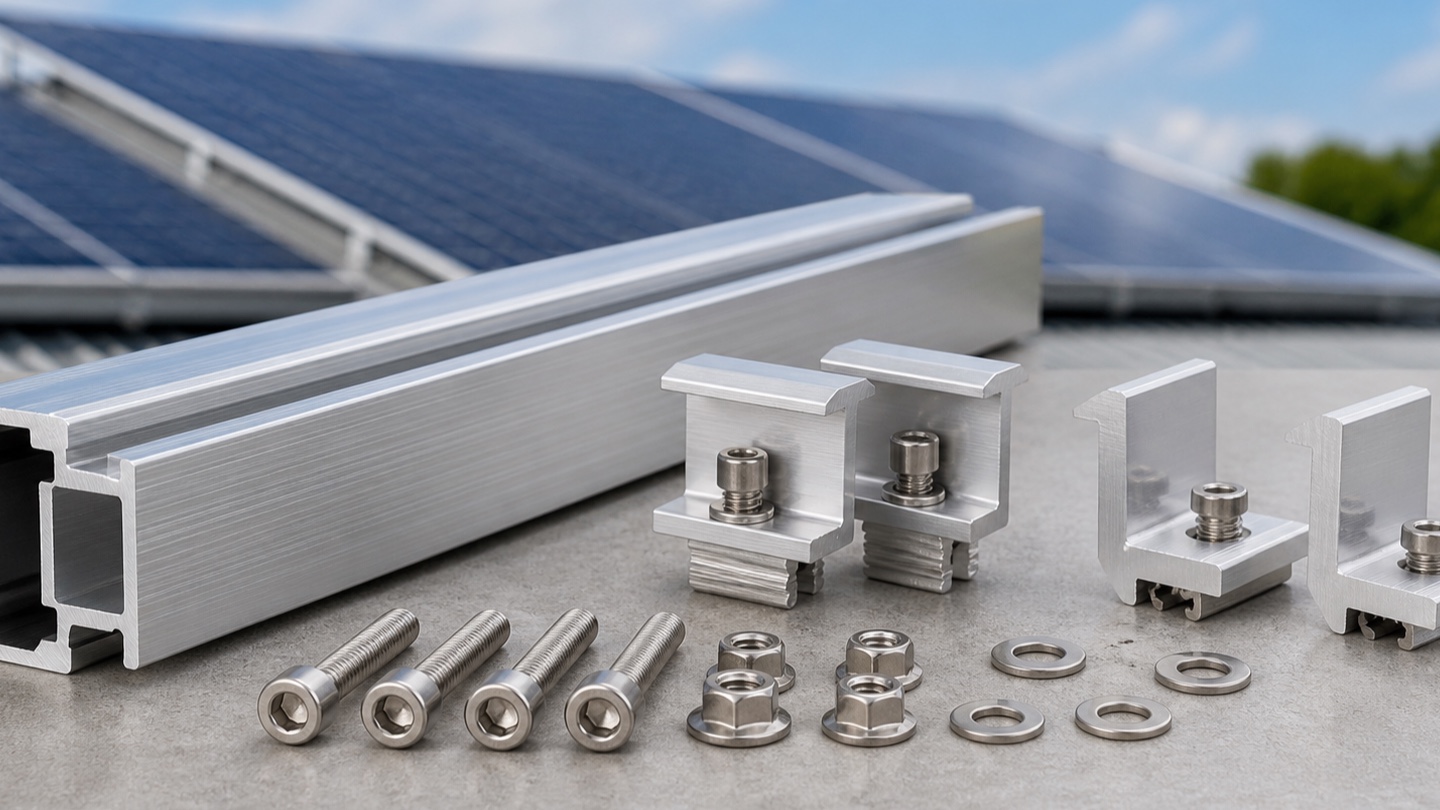
Mounting rails, mid clamps and end clamps form the interface between photovoltaic modules and the supporting structure. Although these parts may look straightforward, dimensions and profiles vary between systems. A useful purchase request therefore begins with the approved layout and compatible component details—not only the number of panels.
Start with the approved mounting design
The mounting arrangement should be based on the module layout, roof or ground condition, site loads and the structural design approved for the project. The same module count can require different rail lengths, support spacing and fixing hardware on different sites.
Before requesting a quotation, confirm the array dimensions, module orientation, row arrangement, support locations and any restrictions created by roof edges, obstructions or access paths. Structural selection and fixing details should be confirmed by the responsible designer or installer.
Match the rail profile to the complete system
A rail is not an isolated item. Its profile must accept the specified clamps, fasteners, splices and roof or structure attachments. Two rails with similar external dimensions may use different channels or connection methods, so visual similarity does not establish compatibility.
Share the required rail profile or approved system reference with the supplier. Confirm stock lengths, splice requirements, cutting allowance and whether end caps or other finishing accessories are part of the requirement.
Check mid-clamp and end-clamp compatibility
Mid clamps secure adjacent modules along a shared rail, while end clamps secure the modules at the outside edges of a row. Both must suit the rail system and the module frame dimensions specified by the module manufacturer.
Record the module frame height and the permitted clamping zones before ordering. Also confirm the clamp width, bolt and channel-nut arrangement, material, finish and tightening requirements for the approved system. Do not assume one clamp size fits every framed module.
Confirm material and environmental requirements
Mounting components are exposed to weather for the life of the array. The project specification may call for particular aluminium grades, stainless-steel fasteners, galvanized components, coatings or isolation between dissimilar materials. Coastal, industrial and other corrosive environments may require additional consideration.
Ask for documentation corresponding to the exact components being quoted, and have the responsible professional confirm that their materials and finishes suit the site and the rest of the mounting assembly.
Build quantities from the module layout
Count rails, mid clamps and end clamps row by row rather than applying a rough quantity per module. Row breaks, rail splices, module orientation and array geometry all affect the final count. Include the specified bolts, nuts, washers, splices, anchors and attachment hardware needed to make each connection.
Measured rail runs also help reduce avoidable offcuts. Where cutting is planned at site, confirm how cut edges and ends should be treated and allow only the practical margin approved by the project team.
Information to include in a quote request
A supplier can check the requirement more effectively when the enquiry identifies the system instead of listing generic component names.
- Module make, model, dimensions and frame height
- Approved array layout, module orientation and number of rows
- Required rail profile, stock length and total measured run
- Mid-clamp and end-clamp sizes and quantities
- Fastener, splice, anchor and attachment requirements
- Specified materials, finishes and site environment
- Delivery location, required date and acceptable alternatives
Review the quotation as a system
Compare quotations using the complete bill of materials. Check whether rail splices, channel nuts, bolts, washers, end caps and structure attachments are included or priced separately. A lower rail price may not represent a lower installed material cost if essential accessories are missing.
Before placing the order, ask the designer or installer to verify the quoted component profiles, quantities and interfaces against the latest approved layout. This final check is especially important when an alternative make or profile has been proposed.
Key takeaway
Choose solar rails, mid clamps and end clamps as one compatible mounting system. Base quantities on the approved row-by-row layout, confirm module-frame and rail compatibility, and include every splice, fastener and attachment in the purchase requirement.