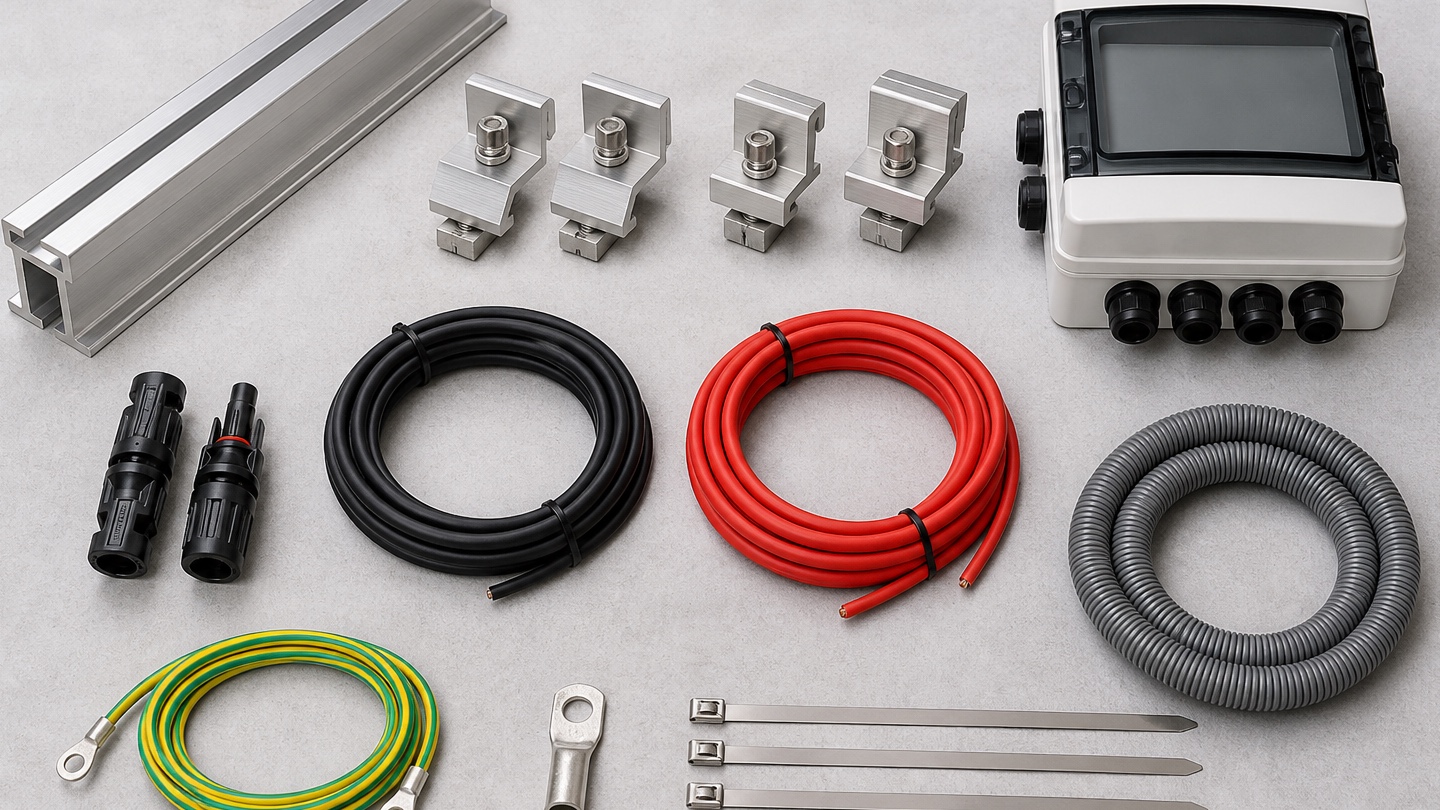
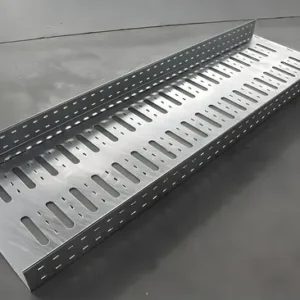
Cable management is part of the installation design, not a finishing detail. The route must protect conductors, support the required cable load, allow suitable separation and remain accessible for inspection. A complete order includes bends, branches, supports and fixings as well as straight conduit or tray lengths.
Map the cable route before choosing materials
Mark the path from the array to the inverter and onward to distribution equipment, along with earthing and communication routes where applicable. Record indoor and outdoor sections, changes in level, wall or roof penetrations, exposed areas and access constraints.
Use the approved electrical layout to maintain the required routing, separation and support arrangement. A site sketch with measured lengths makes both quantity checks and supplier discussions more reliable.
Choose between conduit, tray and trunking by location
Conduit provides an enclosed route and is often used where conductors need physical protection through defined paths. Cable trays support groups of cables along accessible routes, while trunking provides a more enclosed, organized pathway for compatible applications.
The project specification should determine material, size, finish and environmental suitability. Outdoor sunlight, moisture, temperature, corrosion exposure and the fixing surface all affect the selection.
Include every bend, branch and transition
Straight lengths are only part of the bill of materials. Count elbows, tees, couplers, reducers, covers, end pieces, glands, bushings and transitions between routing systems wherever the path changes.
Check that bends and entry arrangements suit the cable sizes and permitted bending requirements. Avoid forcing the route to fit the accessories after materials arrive on site.
Plan clips, supports and cable ties
The approved installation detail should define how frequently conduit, tray and cables are supported. Count brackets, channels, clips, clamps, anchors and fasteners along each route and at changes in direction.
Select cable ties for the environment and intended duty. Outdoor, high-temperature or corrosive locations may require different materials from indoor panel wiring. Ties should manage cables without damaging insulation or creating unsuitable stress.
Allow for identification and maintenance
Include circuit labels, route markers and identification required by the project. Keep access to junctions, protective equipment and inspection points clear, and make sure covers or removable sections can be reached after installation.
A tidy route is not automatically a serviceable one. Review how technicians will inspect, trace and replace conductors without dismantling unrelated equipment.
Send a route-based material enquiry
A supplier can quote more accurately when the enquiry separates each route type and includes its accessories.
- Route sketch with indoor, outdoor and exposed sections
- Cable quantities, sizes and grouping for each route
- Conduit, tray or trunking material, size and finish
- Straight lengths plus elbows, tees, joints, covers and transitions
- Support spacing and quantities of clips, brackets and fasteners
- Cable-tie material, size and environmental requirement
- Identification, delivery quantity and required date
Frequently asked questions
What should a solar cable-management bill of materials include?
Include straight conduit, tray or trunking lengths; elbows, tees, couplers, covers and transitions; clips, brackets, anchors and fasteners; cable ties; entry accessories; and route identification.
How are cable-routing quantities estimated?
Measure each approved route, count every change in direction and transition, then calculate supports from the specified arrangement. Separate indoor and outdoor sections because their material requirements may differ.
Are PVC and stainless-steel cable ties interchangeable?
No. Tie material and size should match the environment, temperature, exposure and intended duty. Follow the approved project specification rather than substituting by appearance alone.
Key takeaway
Order solar cable-management materials from a measured route plan. Match conduit, trays, trunking, fittings, supports and ties to the environment and include every direction change and transition.